David Watkin
Biography
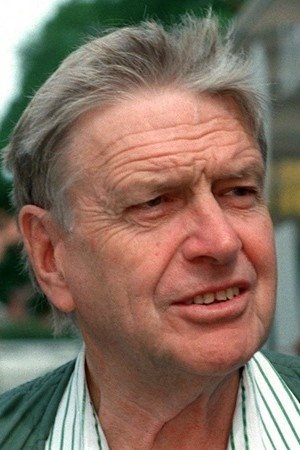
David Watkin BSC (March 23, 1925 – February 19, 2008) was a British cinematographer, an innovator who was among the first directors of photography to experiment heavily with the usage of bounce light as a soft light source. He worked with such film directors as Richard Lester, Peter Brook, Tony Richardson, Mike Nichols, Ken Russell, Franco Zeffirelli, Sidney Lumet and Sydney Pollack. In 1985, Watkin won the Academy Award for Best Cinematography for his work on Out of Africa. He received lifetime achievement awards in 2004 from the British Society of Cinematographers and the cinematographic-centric Camerimage Film Festival in Łódź, Poland. In Chariots of Fire, he "helped create one of the most memorable images of 1980s cinema: the opening sequence in which a huddle of young male athletes pounds along the water's edge on a beach" to the film's theme music by Vangelis. Early life and career Watkin was born in Margate, Kent, England, the fourth and youngest son of a Roman Catholic solicitor father and homemaker mother, and grew up within a well-to-do upper-middle class household. He gained an early enthusiasm for European classical music, which was left to be satisfied only as a passive listener when his father rejected his request for a piano and lessons; Watkin always contended that he would rather have been a professional musician than a cinematographer. After a brief period in the Army during World War II, Watkin started work at the Southern Railway Film Unit in 1948 as a camera assistant. After the unit was absorbed into British Transport Films in 1950, he eventually climbed the ranks up to director of photography at BTF before going off to work freelance in commercials around 1960. Before working in feature films "as a fully fledged cinematographer", he shot the title sequence of the James Bond film, Goldfinger (1964). - Work with Richard Lester It was on a commercial shoot that he met Richard Lester, who hired him for his feature film, The Knack …and How to Get It (1965) which won the Palme d'Or at Cannes. The two men subsequently worked together on Help!, How I Won the War, The Bed-Sitting Room, The Three Musketeers, The Four Musketeers, Robin and Marian and Cuba. - Watkin's casual approach He was noted for his very casual approach; when asked when he first developed a passion for photography, he answered that he hadn't as of yet (his main passions being classical music and books). However, filmmaking did have an attraction because, as he said, "I knew filmmakers didn't have to wear a suit". He also has a rather famous habit of sleeping on-set in between lighting setups, because "it's the only thing you can do on-set which doesn't make you more tired". This habit was humorously referenced in Night Falls on Manhattan (1997), which he shot, where he has a brief cameo towards the beginning as a sleeping judge. In the case of the film of Marat/Sade (1967), problems with a tight shooting schedule and restricted set space were innovatively resolved through the use of one single lighting set-up for the entirety of the film - a translucent wall lit by twenty-six 10 kW lamps as the sole source of light. - Style and technique He was generally recognised for the "painterly qualities" in his work with some critics comparing him with Vermeer, the Dutch artist "who often illuminated his subjects with light refracted through windows". In Out of Africa he broke with tradition and "used fast film for exteriors and slow film for night and interiors. This typically maverick move gave Sydney Pollack's film a lush, soft quality that matched its romantic mood". - Conception of a new lighting technique Watkin also conceived of the idea for a new light which would tackle the problem of light falloff during night shoots. Because of the inverse square law, light from even moderately strong sources starts to fall off fairly quickly as the subject walks away from the light source. Therefore films shooting at night had the problem of trying to hide light sources in places which would be out of shot but maintain a fairly constant level of illumination over any amount of distance (and thus not indicate a large lamp as a light source). His solution was to build a large array of tightly spaced Fay lights in a 14 x 14 square (196 lights total), which was then elevated 150 feet (46 m) high on a cherry picker placed roughly a quarter of a mile away. Due to the long distance between the light and the actors and the high luminescence of this light array, the actors could walk across long distances without the intensity of the light hitting them seeming to vary. Subsequently, the array was named the "Wendy-light" in his honor — Watkin, who was gay, used the camp name "Wendy". Death David Watkin died, aged 82, following a battle with prostate cancer at his home in Brighton on 19 February 2008. Selected filmography The Six Sided Triangle, 1963 Goldfinger, 1964 (title sequence) The Knack …and How to Get It, 1965 Help!, 1965 Mademoiselle, 1966 Marat/Sade, 1967 How I Won the War, 1967 The Charge of the Light Brigade, 1968 The Bed-Sitting Room, 1969 Catch-22, 1970 The Devils, 1971 The Boy Friend, 1971 The Homecoming, 1973 A Delicate Balance, 1973 The Three Musketeers, 1973 The Four Musketeers, 1974 Mahogany, 1975 Robin and Marian, 1976 Joseph Andrews, 1977 Jesus of Nazareth, 1977 Hanover Street, 1979 Cuba, 1979 Chariots of Fire, 1981 Yentl, 1983 The Hotel New Hampshire, 1984 Return to Oz, 1985 White Nights, 1985 Out of Africa, 1985 (Academy Award for Cinematography) Moonstruck, 1987 Last Rites, 1988 Masquerade, 1988 Memphis Belle, 1990 Hamlet, 1990 The Cabinet of Dr. Ramirez, 1991 Used People (1992) This Boy's Life, 1993 Bopha!, 1993 Milk Money, 1994 Jane Eyre, 1996 Night Falls on Manhattan, 1997 Gloria, 1999 Tea with Mussolini, 1999
Hell on Earth The Desecration & Resurrection of The Devils
Self
The Beatles: Help!
Self
Eroica
Musician
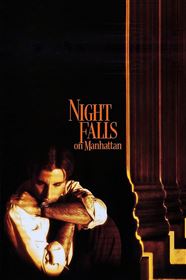
Night Falls on Manhattan
Sleeping Judge (uncredited)
The Beatles: Help!
Self
Eroica
Musician
Hell on Earth The Desecration & Resurrection of The Devils
Self
Night Falls on Manhattan
Sleeping Judge (uncredited)


