Otto Preminger
Biography
Otto Ludwig Preminger (December 5, 1906–April 23, 1986) was an Austrian film director who moved from the theatre to Hollywood, directing over 35 feature films in a five-decade career. He rose to prominence for stylish film noir mysteries such as Laura (1944). In the 1950s and 1960s, he directed a number of high-profile adaptations of popular novels and stage works. Several of these pushed the boundaries of censorship by dealing with topics which were then taboo in Hollywood, such as drug addiction (The Man with the Golden Arm, 1955), rape (Anatomy of a Murder, 1959), and homosexuality (Advise and Consent, 1962). He was twice nominated for the Best Director Academy Award. He also had a few acting roles. In April 1935, as Preminger was rehearsing a boulevard farce, The King with an Umbrella, he received a summons from American film producer Joseph Schenck, to a five o'clock meeting at the Imperial Hotel. In 1924 Schenck had become the president of United Artists, and in 1934 had founded a new company called Twentieth Century. Two years later (only several months before his meeting with Preminger), Schenck had taken over William Fox's ailing studio and with a partner, Darryl F. Zanuck, had set-up a new entity, Twentieth Century-Fox. At the new studio, Zanuck handled all film production while Schneck managed the finances. The duo, now in competition with already well-established studios such as Paramount and Metro-Goldwyn-Mayer, were on the lookout for new talent. Within a half-hour Preminger accepted an invitation to come to work in Twentieth in Los Angeles. Future film producer Sam Spiegel accompanied Preminger from Vienna to Paris by train and from Paris, Otto on his own took another train to Le Havre, where he joined up with Gilbert Miller and his wife, Kitty Miller, who sailed with him to New York, on the Normandie. The Normandie arrived in New York on October 21, 1935. Upon the Premingers' arrival in Hollywood, Schenck introduced the couple to its array of movie royalty including; Irving Thalberg, Norma Shearer, Gary Cooper, Joan Crawford, and Greta Garbo. For Preminger, the most memorable party was at Pickfair, Mary Pickford's hilltop mansion in Beverly Hills, where he met Charlie Chaplin. Preminger quickly adapted to the assembly-line formation of the studio system. Preminger's first assignment was to direct a vehicle for Lawrence Tibbett, a renowned opera singer Zanuck wanted to get rid of. Tibbett had achieved mild success for Metro-Goldwyn-Mayer in musicals throughout the early 1930s and then returned to the stage. Zanuck later lured Tibbett back to films with a generous contract. Preminger worked efficiently, completing the film well under budget and well before the scheduled shooting deadline. The film opened to tepid notices in November 1936. Preminger, proving to Zanuck's satisfaction that he was not a typical rebellious European hotshot, graduated. Zanuck promoted him to the A-list, assigning him a story called Nancy Steele Is Missing, which was to star Wallace Beery, who had recently won an Academy Award for The Champ. Beery, however, refused to do so, saying, "I won't do a picture with a director whose name I can't pronounce." Zanuck instead gave Preminger the task of directing another B-picture comedy called Danger - Love at Work. French starlet Simone Simon was cast in the lead but was later fired by Zanuck and replaced with Ann Sothern. The premise told the story of a lawyer who must persuade eight members of an eccentric rich family to agree to hand over land left them by their grandfather to a corporation for development. Reviews of the disposable farce, released in September 1937, were surprisingly pleasant. In November 1937, Zanuck's perennial emissary Gregory Ratoff brought Preminger the news that Zanuck had chosen him to direct Kidnapped, the most expensive feature to date in the studio's history. Zanuck himself, had adapted the Robert Louis Stevenson novel, set in the Scottish Highlands. After reading Zanuck's scripts, Preminger knew he was in trouble; a foreign director directing in a foreign setting? In was during the shooting of Kidnapped that Preminger would have what would be the first of his notorious tantrums. While screening footage of the film to Zanuck, he accused Preminger of making changes in a scene between child actor Freddie Bartholomew and a dog. Preminger, composed at first, explained he had shot the scene directly as it was written in the scripts. Zanuck insisted he knew his own script, and disagreed. The confrontation turned quickly and ended with Preminger exiting the office and slamming the door. Days later the lock to Preminger's office was changed and his name was removed from the door. After his parking space was relocated to a remote spot, Preminger stopped going to the studio. At that point, an official for Zanuck offered Preminger a buyout deal, which he rejected: he wanted to be paid for the remaining eleven months of the two-year contract he had signed. Preminger searched for work at other studios, but received no offers. Only two years after his arrival in Hollywood, Preminger was now unemployed. He enrolled in American history courses at UCLA. Preminger would come to realize that his only chance for rehabilitation would be in the place where he had launched his career, the theater. Success came quickly on Broadway for Preminger, with long-running productions including; Outward Bound with Laurette Taylor and Vincent Price, My Dear Children with John and his wife Elaine Barrymore, and Margin for Error, in which Preminger played a shiny-domed villainous Nazi. A week after the opening of Margin, Preminger was offered a teaching position at the Yale School of Drama. Preminger began commuting twice a week to Yale to lecture on directing and acting. Nunnally Johnson, a Hollywood writer impressed with Preminger's performance in Margin called to ask if he would be interested in playing another Nazi, in a film called The Pied Piper. Preminger accepted on the spot, in dire need of money. The film was to be made for Twentieth Century-Fox, the studio which had banished him from. Even with the absence of Zanuck, who joined the Army after Pearl Harbor, Preminger did not expect on remaining in Hollywood. After collecting a sizable salary for his work, Preminger was preparing to return to New York when his agent informed him that Fox wanted him to reprise is role in the upcoming film adaptation of Margin for Error. Famed director Ernst Lubitsch was set to direct and Preminger was to appear onscreen alongside Joan Bennett and Milton Berle. Lubitsch withdrew not long after production began and Preminger saw his chance to gain back what he had lost in his falling out with Zanuck, a chance to direct again. William Goetz, who was running Fox in Zanuck's absence, was persuaded by Preminger and took the bait. With the present script of Margin in shambles, Preminger hired a movie novice named Samuel Fuller, who at the moment was on leave from the Army, to rework the entire script. Goetz was soon impressed with his views of the dailies each night and offered Preminger a new seven-year contract calling on his services as both a director and actor. Preminger took full measure of the temporary studio czar and accepted. Preminger completed production on schedule with a slightly increased budget in November 1942. Critics were dismissive upon its release the following February, noting the bad timing of the release, coinciding with the war. Before his next assignment with Fox, Preminger was asked by movie mogul Samuel Goldwyn to appear as a Nazi yet again, this time in a Bob Hope comedy called They Got Me Covered. Hope played a bumbling reporter who uncovers an Axis spy ring in wartime Washington. Preminger, an avid reader, hoped to find possible properties he could develop before Zanuck's return, one of which was Vera Caspary's suspense novel Laura. Before production would begin on Laura, Preminger was given the greenlight to direct and to produce Army Wives. Army Wives was another B-picture morale booster for a country at war, showing the sacrifices made by women as they send their husbands off to the frontlines. Cast in the lead was Jeanne Crain, a contract star for Fox who was being groomed for the A-list. Veteran character actor Eugene Pallette played Crain's father. Preminger clashed with Pallette and claimed he was "an admirer of Hitler and convinced that Germany would win the war." Pallete also refused to sit down at the same table with a black actor in a scene set in a kitchen. "You're out of your mind, I won't sit next to a nigger," Pallette hissed at Preminger. Otto, furiously informed Zanuck, who fired the actor, whose scenes had already been shot. Army Wives was given a new title In the Meantime, Darling, and opened in September 1944, with an estimated budget of $450,000. Aside from the incident with Pallette, no other complications arose during the filming, the hurdles would instead come soon after during the shooting of Laura. [edit] Laura Zanuck returned from the armed services still with a grudge against Preminger. Although Preminger had been "forgiven" by Zanuck, he was not granted permission to direct Laura, but only allowed to produce the picture. Instead, Rouben Mamoulian would be at the directing helm. Much to Preminger's dismay, Mamoulian began ignoring his producer and even started to rewrite the script. Although Preminger had no complaints about the casting of the young actor's Gene Tierney and Dana Andrews, he balked at their choice for Waldo: Laird Cregar. Preminger explained to Zanuck that audiences would immediately identify with Cregar as a villain, especially after Cregar's role as Jack the Ripper a year earlier in The Lodger. Preminger instead was ideally taken by stage actor Clifton Webb. Even after Zanuck made crude remarks about Webb's homosexuality, Preminger persuaded his boss to at least give Webb a screen test. The persuasion paid off and Webb was cast, and Mamoulian was fired for creative differences. Mamoulian would only direct two more films during the next forty-five years of his life. As was the case with Laura, he was later to be replaced on two more films: in 1958 from Porgy and Bess (again by Preminger), and in 1961 from Cleopatra (replaced by Joseph Mankiewicz). Laura started filming April 27, 1944, with a projected budget of $849,000. After Preminger took over, the film continued shooting well into late June. The film was an instant hit with audiences and critics alike, earning Preminger his first Academy Award nomination for his direction, Clifton Webb a Best Supporting Actor nomination, Lyle Wheeler, an art direction nomination, and Joseph La Shelle won the Academy Award for his stark noir cinematography. It propelled it two relatively unknown young actors Gene Tierney and Dana Andrews to the top of the Hollywood box office. David Raksin's haunting theme song would become one of the most memorable in Hollywood history. [edit] Peak years Preminger expected that acclaim for Laura would promote him to work on better pictures, but his professional fate was in the hands of Darryl Zanuck. Instead of the kind of plum he was certainly justified in expecting, Zanuck had Preminger take over for the ailing Ernst Lubitsch, who had recently suffered a heart attack, on A Royal Scandal, a remake of Lubitsch's own 1924 silent Forbidden Paradise, starring Pola Negri as Catherine the Great. Before his heart attack, Lubitsch had spent months in preparation on the film, and had already casted the film. Otto, who had known Tallulah Bankhead before the start of the Nazi invasion into Austra, could not have gotten along better with his new leading lady. The two further bonded in part of their heavy dislike towards Anne Baxter, cast as a lady-in-waiting and the Empress's romantic rival. Baxter assumed a grand manner that rubbed them the wrong way. When Baxter asked if her grandfather, architect Frank Lloyd Wright, a conservative Republican and a noted anti-Semite, could visit the set, liberal Democrats Preminger and Bankhead were incensed. The film received lackluster reviews and failed to earn back any gross revenue. Lubitsch's large body of comedy work had made him a first-rate filmmaker, Preminger however, directed the film in a way in which people felt Lubitsch would have done better. The failure of A Royal Scandal proved to be the end of the line for Bankhead as a film personality. She would only appear in one more film twenty years later. In the noir story mold of Laura, Preminger's next picture Fallen Angel was exactly what Preminger had been anticipating. In Fallen Angel, a con man and a womanizer ends up by chance in a small California town, where he romances a sultry waitress and a well-to-do spinster. When the waitress is found killed, the drifter, played by Dana Andrews, becomes the prime suspect. Zanuck gave Preminger the task of convincing Alice Faye, the studio's top musical star of the late 1930s and early 1940s, to play the role of the spinster. Zanuck hoped Faye's appearance would boost the film's box-office appeal and introduce Faye back into the public eye. Linda Darnell was given the role of the doomed waitress. Off the set, Darnell had already begun a lifelong battle with alcohol. Despite its visual and stylistic victories, Fallen Angel did not match the achievement of Laura. Centennial Summer, Preminger's next film, would be his first to be shot entirely in color. Hoping to duplicate the success of MGM's 1944 musical Meet Me in St. Louis, Zanuck enlisted both Preminger and famed Broadway composer Jerome Kern. The musical detailing two sisters in an idealized all-American working-class family, who become rivals over the same man. The cast included Jeanne Crain and Linda Darnell as the dueling sisters, Cornel Wilde as the charming prize, and veteran stars Walter Brennan, Constance Bennett, and Dorothy Gish in supporting roles. Both reviews and box office draw were tepid when the film was released in July 1946. By the end 1946 Preminger had one of the most sumptuous contracts on the lot, earning $7,500 a week. Kathleen Winsor's internationally popular novel Forever Amber was Zanuck's next investment into adaptation. Preminger had read the book and disliked it immensely. Preminger had another best seller aimed at a female audience in mind, Daisy Kenyon. Zanuck pledged that if Preminger do Forever Amber first, he could go to town with Daisy Kenyon afterwards. Forever Amber had already begun shooting for nearly six weeks when Preminger replaced director John Stahl. Zanuck had already spent nearly two million dollars on the production. First, Preminger decided the script needed to be completely rewritten, and Peggy Cummins, the film's leading lady would have to be replaced, whom Otto found to be "amateurish beyond belief". Only after returning in his revised script did Preminger learn that Zanuck had already cast Linda Darnell in place of Cummins. The heroine in the novel was blonde, and Preminger was convinced it was necessary to cast a true blonde, Lana Turner, who was under contract to MGM. Zanuck protested, and was convinced that whoever played Amber would become a big star, and wanted that woman to be one of the studio's own. Zanuck had bought the book because of its scandalous reputation promised big box-office returns, and was not surprised when the Catholic Legion of Decency condemned the film glamorizing a promiscuous heroine who has a child out of wedlock. Forever Amber opened to big business in October 1947, and even garnered some decent reviews. Preminger later recalled the Forever Amber was "by far the most expensive picture I ever made and it was also the worst." Throughout the five-month shoot on Forever Amber Preminger maintained a busy schedule, working regularly with writers on scripts for two upcoming projects, Daisy Kenyon and The Dark Wood. Preminger was finally relieved to be working on Daisy Kenyon. Joan Crawford starred in the title role as a magazine illustrator facing a romantic conflict: Will she choose a prominent, married lawyer or an unmarried neurotic veteran? Crawford was enthusiastic about the role, coming only two years after winning an Academy Award for Mildred Pierce. Preminger veteran Dana Andrews is the unfaithful lawyer whose unloved wife, played by Ruth Warrick, takes her anger out on her daughters and beats them hysterically. Henry Fonda is a grieving widower and war vet plagued by nightmares. Variety magazine proclaimed, the film is "high powered melodrama surefire for the femme market." After the modest success of Daisy Kenyon, Preminger, an avid careerist, saw That Lady in Ermine as an opportunity. Betty Grable was cast as a countess who saves her small mythical country when she seduces the Hungarian colonel in charge of the occupation, played by Douglas Fairbanks, Jr. The film had previously been another Lubitsch project, but after his sudden death in November 1947, Preminger took over direction. When the film opened to modest business in July 1948, it received better notices than it deserved as reviewers scrambled to discern traces of Lubitsch's hand. Preminger's next film would be another period piece based on a literary classic, an adaptation of Oscar Wilde's 1897 play Lady Windermere's Fan. Over the spring and early summer of 1948 Otto renovated Wilde's play into The Fan. Madeleine Carroll plays Mrs. Erlynne, who tries to save her married daughter Lady Windermere (Jeanne Crain) from ruining her reputation. As Preminger fully expected, The Fan opened to withering notices. George Sanders and Martita Hunt, each have supporting roles. Although it is now remembered as the most obscure work of Preminger's career, it is also seen as his most underrated film. Starting in the 1950s, Preminger's reputation rose to the point that he was commissioned to direct a number of prestigious projects with A-list casts and based on successful novels or stage works. Several of these films broke new ground for Hollywood in tackling controversial and taboo topics. Some of his most significant films of this period include: --The Moon is Blue (1953): a comedy which was condemned by the Catholic Legion of Decency for use of the word “virgin.” --Carmen Jones (1954): A reworking of the opera Carmen in an African-American setting. --The Man with the Golden Arm (1955): Based on the novel by Nelson Algren, one of the first Hollywood films to deal with heroin addiction. --Porgy and Bess (1959): A Hollywoodization of the Gershwin opera. --Anatomy of a Murder (1959): Critically acclaimed courtroom drama about a murder-rape incident. Nominated for the Best Picture Academy Award. --Exodus (1960): Filming of the Leon Uris bestseller set around the founding of the state of Israel. --Advise and Consent (1962): Political drama from the Allen Drury bestseller. One of the first mainstream films to deal frankly with homosexuality, including a scene set in a New York gay bar. --The Cardinal (1963): A drama set in the Vatican hierarchy. Earned Preminger his second Best Director Academy Award nomination. --Bunny Lake is Missing (1965): A return to the mystery/thriller genre, set in England. From the mid-1950s, most of Preminger's films utilized distinctive animated titles designed by Saul Bass, and many had modern jazz scores. At the New York City Opera, in October 1953, Preminger directed the American premiere (in English translation) of Gottfried von Einem's Der Prozeß (The Trial), after Franz Kafka. Soprano Phyllis Curtin headed the cast. Preminger also acted in a few movies; his most memorable role is that of the warden of a German POW camp in Stalag 17. In the 1960s Batman television series, Preminger was the second of three actors who played Mr. Freeze, in the two-parter "Green Ice/Deep Freeze." Adam West, who portrayed Batman, remembers Preminger as rude and unpleasant. Ingo Preminger, who produced the 1970 M*A*S*H movie, was Otto Preminger's youger brother. In 1967, Preminger released Hurry Sundown, a lengthy drama set in the U.S. South and partially intended to break cinematic racial and sexual taboos. However, the film was poorly received and ridiculed for a heavy-handed approach, and for the casting of Michael Caine as a southern patriarch. Hurry Sundown signaled a rather precipitous decline in Preminger's reputation, as it was followed by several other films which were critical and commercial failures, including Skidoo (1968), a failed attempt at a hip sixties comedy (and Groucho Marx's last film), and Rosebud (1975), a terrorism thriller which was also widely ridiculed. Several publicized disputes with leading actors did further damage to Preminger's reputation. His last film, an adaptation of the Graham Green espionage novel The Human Factor (1979), had financial problems and was barely released. Otto Preminger died in 1986, aged 79, of cancer and Alzheimer's disease, and was interred in the Woodlawn Cemetery, The Bronx, New York.
Stalag 17
Oberst von Scherbach

The Hobbit
The Elvenking (voice)
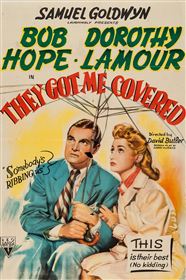
They Got Me Covered
Fauscheim
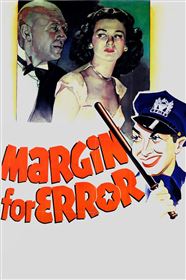
Margin for Error
Karl Baumer

The Pied Piper
Major Diessen

Self (archive footage)

Hollywood on Trial
Self - Interviewee

Where Do We Go from Here?
General Rahl (uncredited)

Sing Your Song
Self (archive footage) (uncredited)

Skidoo
We would like to introduce our cast and crew (voice) (uncredited)
Sing Your Song
Self (archive footage) (uncredited)
Self (archive footage)
The Hobbit
The Elvenking (voice)
Hollywood on Trial
Self - Interviewee
Skidoo
We would like to introduce our cast and crew (voice) (uncredited)

Bunny Lake Is Missing
On-screen Trailer Host and Narrator (uncredited)
Stalag 17
Oberst von Scherbach
Where Do We Go from Here?
General Rahl (uncredited)
They Got Me Covered
Fauscheim
Margin for Error
Karl Baumer
The Pied Piper
Major Diessen


