Robert Stigwood
Biography
Robert Stigwood (born 16 April 1934 in Adelaide, South Australia) is an impresario and entertainment entrepreneur who relocated to England in 1954. In the 1960s and 1970s he was one of the most successful figures in the entertainment world, through his management of music groups like Cream and The Bee Gees, theatrical productions like Hair and Jesus Christ Superstar and film productions including the hugely successful Saturday Night Fever. Live Robert Stigwood was born in Adelaide in 1934, the son of an electrical engineer. He began his working life as a copywriter for a local advertising agency and in 1955 moved to England. He had an eventful trip: in one incident recounted by Simon Napier-Bell Stigwood bravely climbed fifty feet down a rope ladder into the hold of a tanker to administer morphine to a seaman who had fallen through a hatch. In Turkey he spent several months living with the family of a young friend in a hut in a small village and working with them in the fields. Stigwood found a job in an institution for "backward teenage boys" in East Anglia after his arrival in England. He worked primarily on nightshifts, overseeing the dormitories and "preventing any flow of traffic after lights out". However he found it an "unsympathetic and frustrating job" and left. He worked briefly for Hector Ross at the New Theatre Royal in Portsmouth, Hampshire on the south coast before Ross left and the theatre closed. During this time he met the young Paul Jones who would later front the Manfred Mann pop group. Not long after his period in Portsmouth, he met businessman Stephen Komlosy, who became a friend. The two men set up a small theatrical agency and build up a roster of actors. Among their clients was a young actor and singer called John Leyton, whose unexpected success as a recording artist made both Stigwood and his then associate Joe Meek into Britain's first independent record producers. Before the advent of mavericks such as Stigwood and Meek, the British pop music industry was highly stratified. Managers managed artists' careers, agents only booked artists into venues, publishers only published music and sold songs to artists and recording companies, and recording companies recorded, manufactured, sold and promoted the products. It was rare for a manager to also be involved in publishing or agency work and it was almost unheard of for managers, agents or publishers to be directly involved in record production. This situation was typified in the late 1950s and early 1960s by the three dominant figures of British pop: publisher and manager Larry Parnes (one of the first people to combine publishing with artist management), composer Lionel Bart and the managing director of EMI, Sir Joseph Lockwood (1904–91). Typically, Parnes would discover new talent – as he did with Tommy Steele, Marty Wilde and Billy Fury – and then sign them to a management contract. Lionel Bart, under contract to Parnes' publishing company, would write or co-write songs to be recorded and then Parnes would 'sell' the artist to Lockwood and EMI who would sign them to a recording contract, and then record, press and market the records. The brief partnership between Robert Stigwood and Joe Meek is claimed to have changed the British recording industry to a great extent. Stigwood moved into film and TV production in the early 1970s. With his music ventures in the doldrums, Stigwood expanded into film production in the early 1970s with great success. His first feature was a hit screen adaptation of Jesus Christ Superstar (1973), made in association with its director, Norman Jewison. He followed this with the film version of The Who's Tommy (1975), which became one of most successful films at the box-office in its year of release. RSO Films' next production became one of the biggest hits in the history of the business and it also dramatically revived the Bee Gees floundering career, taking them back to the top of the charts in dramatic fashion. The colossally successful Saturday Night Fever (1977) also shot TV actor John Travolta to international stardom. The 2-LP soundtrack album, written by and featuring The Bee Gees, became the biggest selling soundtrack album ever released. The group wrote the songs 'to order' without having seen the film, and according to Frank Rose's 1977 Rolling Stone article about The Bee Gees, at least four of the songs — including "Stayin' Alive" – were written in just one week. Stigwood followed this with another hugely successful film adaptation of one of his stage productions, the rock'n'roll musicalGrease (1978), which co-starred Travolta and Australian singer Olivia Newton-John. Not all Stigwood's films were popular at the box-office, however. Moment by Moment (also 1978), which co-starred Travolta and Lily Tomlin was panned by critics, and is credited with turning Travolta into 'box office poison'. Five years later Travolta again displayed his now-legendary inability to pick roles when he agreed to appear in Stigwood's ill-advised sequel to Saturday Night Fever (1983), Staying Alive, directed by Sylvester Stallone. The movie was a moderate success but did nothing to restart Travolta's stalled career. Soon after Grease, Stigwood made one of the biggest miscalculations of his career with the musical film extravaganza Sgt. Pepper's Lonely Hearts Club Band (also 1978). On paper, the project - with an estimated budget of $18 million - looked like a surefire hit. A fantasy adventure showcasing the songs of The Beatles, it starred two of the hottest rock acts of the period, Peter Frampton and The Bee Gees, plus a long list of rock and film greats in cameos. Unfortunately, problems surfaced early in the schedule and grew steadily worse - Stigwood sacked original director Chris Bearde before shooting began and the Bee Gees were soon begging to be removed from the project, to no avail. Although the new director, Michael Schultz (Car Wash) did a valiant job, the film turned out to be a disastrous flop. Stigwood's also produced the rock-musical teen girl 'buddy' movie Times Square (1980) and his autocratic streak again surfaced during this production. Stigwood wanted to remove dialogue scenes to include more music, so that the soundtrack could be expanded to a double album, but director Allan Moyle refused to make the cuts, so Stigwood fired Moyle (who didn't make another film for ten years) and made the cuts himself. Star Robin Johnson later said of the result: "It was disappointing. It could've been so much more powerful. I'd love to see what Allan's cut would've been." Although not successful at the time, Times Square now has a strong following among gay women. The music soundtrack became a cult favourite due ot the inclusion of many significant new wave acts – Patti Smith, The Pretenders, Talking Heads and Roxy Music – and it also became a collector's item for fans of English band XTC because their track "Take This Town", written especially for the film, was for many years only available on the soundtrack LP (until the release of Rag and Bone Buffet: Rare Cuts and Leftovers in 1990). Other notable films produced by Stigwood include The Fan (1980), Grease 2, Peter Weir's well received Gallipoli (1981), produced under the R&R Films banner, and the 1997 Golden Globe Awards best film winner, Evita, starring Madonna. In 1975, RSO collaborated with Bob Banner Associates to produce a stunt game show, Almost Anything Goes. The program, which aired on the ABC network in the United States, featured three teams of players from small towns in a competition where the emphasis was on good will. The show lasted four seasons. Robert Stigwood remains active, primarily in the theatrical musical industry. He recently sold his Barton Manor Estate on the Isle of Wight, off the south coast of England. Major productions Stage musicals: - Evita (winner of the 1980 Tony Award for Best Musical in the US) - Hair - Oh! Calcutta! - The Dirtiest Show in Town - Pippin - Jesus Christ Superstar - Sweeney Todd - Sing a Rude Song - John Paul George Ringo and Bert Films: - Grease - Jesus Christ Superstar (as co-producer) - Tommy - Bugsy Malone (as executive producer) - Saturday Night Fever - Sgt. Pepper's Lonely Hearts Club Band - Staying Alive - Gallipoli - Fame (as soundtrack producer) - The Empire Strikes Back (as soundtrack producer) Other: - Music for UNICEF Concert (as organiser and executive producer)

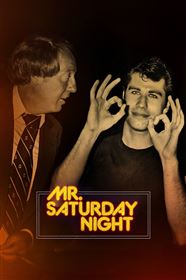
Mr. Saturday Night
Self
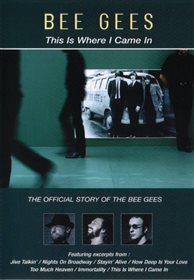
Bee Gees: This Is Where I Came In
Himself

The Fabulous Allan Carr
Self (archive footage)

The Bee Gees: How Can You Mend a Broken Heart
Self - NEMS General Manager 1967-1968 (archive footage)
Mr. Saturday Night
Self
The Bee Gees: How Can You Mend a Broken Heart
Self - NEMS General Manager 1967-1968 (archive footage)
The Fabulous Allan Carr
Self (archive footage)
Bee Gees: This Is Where I Came In
Himself


