Joseph Campbell
Biography
(March 26, 1904 – October 30, 1987) was an American mythologist, writer and lecturer, best known for his work in comparative mythology and comparative religion. His work is vast, covering many aspects of the human experience. His philosophy is often summarized by his phrase: "Follow your bliss." In 1924 Campbell traveled to Europe with his family. On the ship back, he encountered Jiddu Krishnamurti; they discussed Asian philosophy, sparking in Campbell a life-long interest in Hindu and Indian thought. Following this trip, Campbell ceased to be a practicing Catholic. Campbell studied Old French, Provençal and Sanskrit at the University of Paris in France and the University of Munich in Germany. He quickly learned to read and speak French and German, mastering them after only a few months of rigorous study. He remained fluent in these languages for the remainder of his life. (Already fluent in Latin, he would go on to add Japanese to his linguistic arsenal.) He was highly influenced while in Europe by the period of the Lost Generation, a time of enormous intellectual and artistic innovation. Campbell commented on this influence, particularly that of James Joyce. It was in this climate that Campbell was also introduced to the work of Thomas Mann, who was to prove equally influential upon his life and ideas. Also while in Europe, Campbell was introduced to modern art, becoming particularly enthusiastic about the work of Paul Klee and Pablo Picasso. A new world of exciting ideas opened up to Campbell while studying in Europe. Here he also discovered the works and writings of Sigmund Freud and Carl Jung.

Joseph Campbell: Mythos I
Himself
Self (archive footage)
White Fellas Dreaming: A Century of Australian Cinema
Self - Mythologist (archive footage)
Self
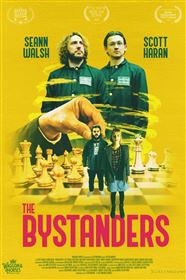
The Bystanders
Barman
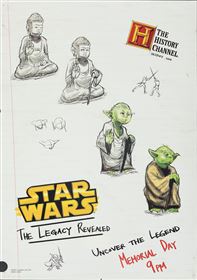
Star Wars: The Legacy Revealed
Self (archive footage) (uncredited)
The Bystanders
Barman
Star Wars: The Legacy Revealed
Self (archive footage) (uncredited)
Self (archive footage)
White Fellas Dreaming: A Century of Australian Cinema
Self - Mythologist (archive footage)
Joseph Campbell: Mythos I
Himself
Self


