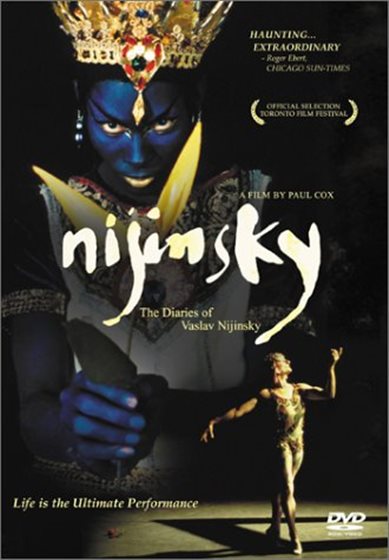
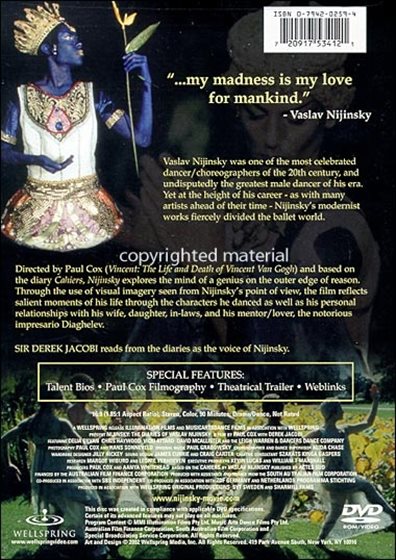
The Diaries of Vaslav Nijinsky (2002)
Special Interest · 1h 30m · 12/3/2002


Description
These disparate yet complementary elements coalesce to convey the worldview of the consummate dancer who describes himself as a philosopher who does not think, but rather feels. The passages are written during a most tumultuous period of the artist's life, in exile from his audience and their adulation, and cut off by his lover and mentor Diaghilev. As he proclaims his love for the world and all its elements, he is either a man in touch with his own divinity or he is simply delusional. Increasingly, a darker side surfaces; he insists that he cannot become insane as he sinks deeper into dissociation, withdrawing from the fear in his family's eyes. His ability to see beneath surface appearances to core realities is both the blessing that fueled his creativity and the curse that undermined his mental stability. Nijinsky lived another 30 years after being confined to an asylum, saved from his own excesses and yet sacrificed to the harsher realities of the world.
Release Country
United StatesBarcode
720917534121Release Date
12/3/2002Media Type
DocumentaryDigital Copy
Not IncludedStudio
WellspringVideo Format
PALAspect Ratio
1.85:1Cover Type
Keep Case (Std.)Discs


Paul Cox
Director

