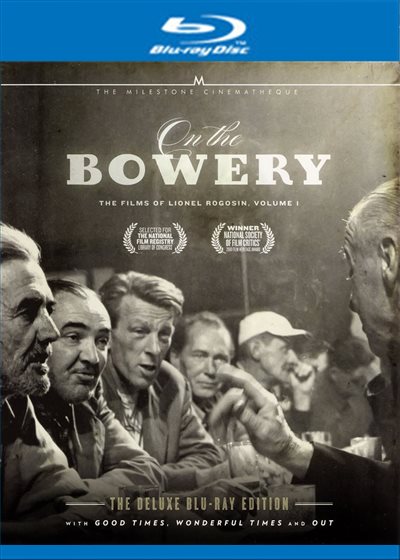
On the Bowery: The Films of Lionel Rogosin, Volume 1
4h 17m · 2/7/2012
Description
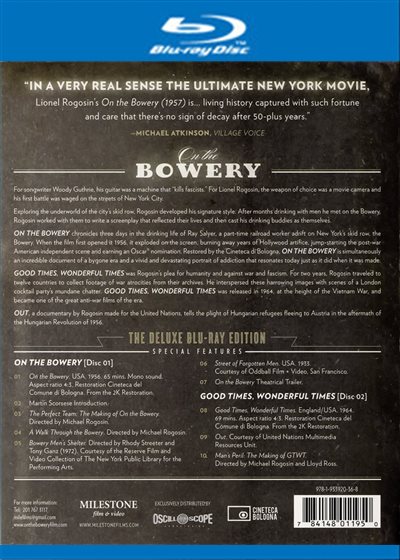
For songwriter Woody Guthrie, his guitar was a machine that "kills fascists." For Lionel Rogosin, the weapon of choice was a movie camera and his first battle was waged on the streets of New York City. Exploring the underworld of the city's skid row, Rogosin developed his signature style. After months drinking with men he met on the Bowery. Rogosin worked with them to write a screenplay that reflected their lives and then cast his drinking buddies as themselves. ON THE BOWERY chronicles three days in the drinking life of Ray Salyer. a part-time railroad worker adrift on New York's skid row. the Bowery. When the film first opened it 1956, it exploded on the screen, burning away years of Hollywood artifice. jump-starting the post-war American independent scene and earning an Oscar nomination. Restored by the Cineteca di Bologna, ON THE BOWERY is simultaneously an incredible document of a bygone era and a vivid and devastating portrait of addiction that resonates today just as it did when it was made. GOOD TIMES, WONDERFUL TIMES was Rogosin's plea for humanity and against war and fascism. For two years. Rogosin traveled to twelve countries to collect footage of war atrocities from their archives. He interspersed these harrowing images with scenes of a London cocktail party's mundane chatter. GOOD TIMES, WONDERFUL TIMES was released in 1964. at the height of the Vietnam War. and became one of the great anti-war films of the era. OUT, a documentary by Rogosin made for the United Nations. tells the plight of Hungarian refugees fleeing to Austria in the aftermath of the Hungarian Revolution of 1956.
Release Country
United StatesBarcode
784148011950Release Date
2/7/2012Media Type
MovieDigital Copy
Not IncludedVideo Format
1080pCover Type
Keep Case (HD Slim, Low)Discs

On the Bowery
Good Times, Wonderful Times


